Fear among the West Point cadets
The Pale Blue EyeFear among the West Point cadets grows from alarm over the deaths of Leroy Fry and Randolph Ballinger into a collective condition that reshapes daily life at the academy. As the deaths remain surrounded by uncertainty, rumor and supernatural speculation compete with the investigation’s physical evidence, while a new paired-guard rule makes fear visible in the cadets’ routine movements.
Causes and Uncertainty
The deaths of Fry and Ballinger form the immediate background to the cadets’ alarm. Examination of Fry’s body raised unresolved questions: the marks on his neck did not resemble a simple, even constriction, and a contusion on his head could be identified without establishing its cause. The evidence offered reasons to doubt easy explanations, but not a complete account of what had happened.
Ballinger’s death deepened that uncertainty. In discussing the scene, Edgar Allan Poe observed that Ballinger had been found at a much greater height than Fry. He reasoned that the injuries could not plausibly have been sustained after the hanging and concluded that the appearance of suicide was untenable. The distinction between what could be observed and what could be inferred left the deaths alarming not only for their consequences but also for the questions they continued to raise.
Rumor and Disruption
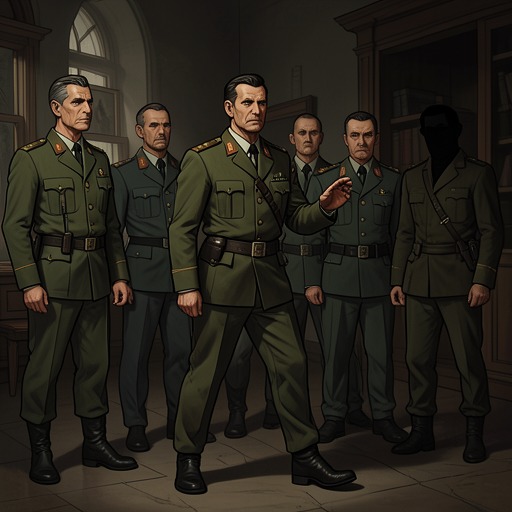
A report to Augustus Landor describes a corps unsettled by Ballinger’s murder and by the suspicion that seemed to follow its members. The writer notes that cadets watched one another closely, while rumors and conjecture made ordinary movement through the academy feel newly exposed. Fear was not confined to private apprehension: cadets reportedly considered sleeping with muskets nearby.
Speculation also took supernatural forms. Some cadets imagined that the attackers were ancestral spirits seeking vengeance for the European extermination of Indigenous people; one fellow cadet claimed to have seen such a spirit on Flirtation Walk. These stories registered the scale of the corps’s unease rather than resolving the crimes. At the same time, Julius Stoddard petitioned Colonel Thayer to cancel the rest of the term, including final examinations, arguing that fear was interfering with the cadets’ ability to study.
Institutional Response
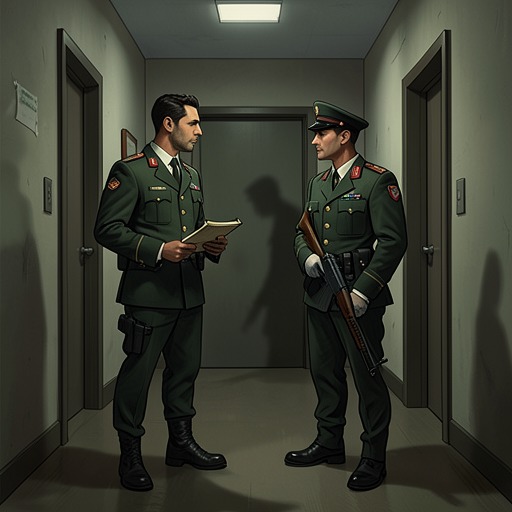
At evening parade, the academy announced that guard posts would be doubled. Under the new arrangement, no cadet could venture abroad without a companion. The rule increased the frequency of sentinel duty, which would ordinarily have prompted complaints; amid the fear, however, the additional burden was accepted as a possible gain in safety.
The paired-guard measure gives the panic a practical and institutional form. It acknowledges a threat the cadets cannot reliably identify, and makes companionship a condition of movement beyond their posts. Protection and restriction arrive together: the rule offers reassurance while also recording how thoroughly the killings have altered the cadets’ sense of security.
Narrative Significance
The cadets’ fear develops where inconclusive evidence, suspected murder, and rumor meet. Their talk of supernatural attackers magnifies what remains unknown, while the investigation’s attention to bodily clues and the circumstances of Ballinger’s death keeps the danger grounded in specific cases. The resulting panic is therefore both a social reaction and a measure of the academy’s vulnerability: study falters, cadets imagine threats, and ordinary guard arrangements are no longer considered sufficient.